High-Drive Dog Exercise: Why A Walk Won’t Cut It
A morning walk around the block isn’t exercise for a working dog — it’s a field trip. Here’s what actually tires them out.
A morning walk around the block isn’t exercise for a working dog — it’s a field trip. A high-drive dog needs something with purpose, intensity, and mental engagement. The difference between a tired dog and an actually satisfied dog isn’t just how far they’ve run. It’s what their brain has done while running.
Working breeds — kelpies, border collies, malinois, cattle dogs, huskies, weimaraners — were built to work for hours in conditions that would exhaust a softer animal. A casual 20-minute walk doesn’t register as exercise to them. It registers as foreplay. And when they’re not actually tired at the end of the day, they invent their own work. Which usually means your bed, your couch, and your garden.
Understanding what “exercise” actually means for a high-drive dog is the difference between owning a dog that settles and owning one that never really switches off.
Physical Exercise: Intensity Over Distance
The first mistake is thinking more distance solves the problem. A five-kilometre walk with no intensity is still just five kilometres of ambling. A high-drive dog needs exercise that actually challenges them — that demands real effort, not just forward motion.
What counts as real exercise:
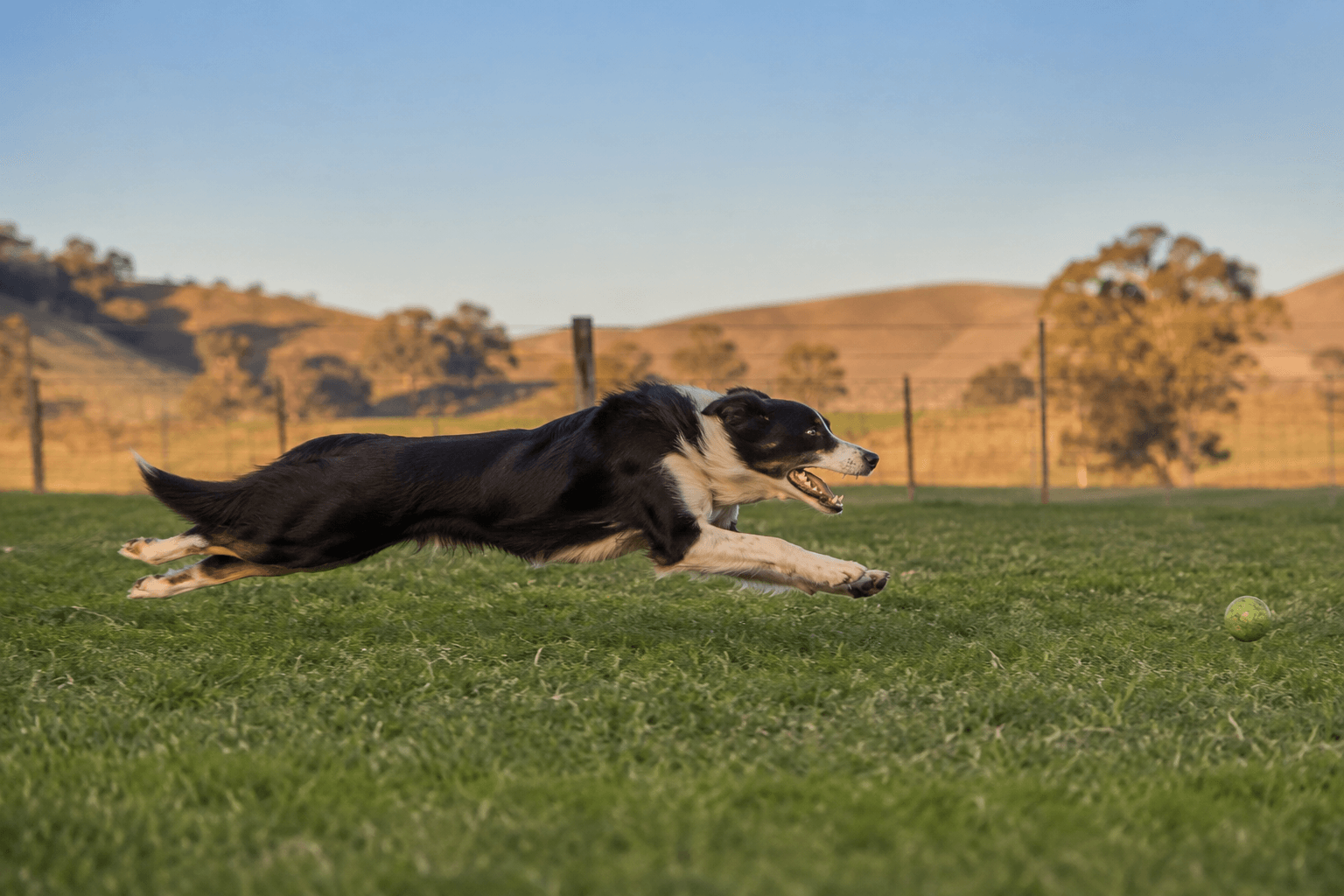
Running or sprinting — not just walking. A working dog needs to hit genuine speed for genuine effort. A 20-minute session of repeated sprints, chasing, or running-based play is worth more than an hour of loose walking. The point is intensity: heart rate up, muscles working hard, actual fatigue at the end.
Fetch and chase work brilliantly here. A dog chasing a ball at full speed is burning serious energy. If your dog loves it, repeated fetch sessions (rest between each one) will genuinely tire them out in a way a walk won’t.
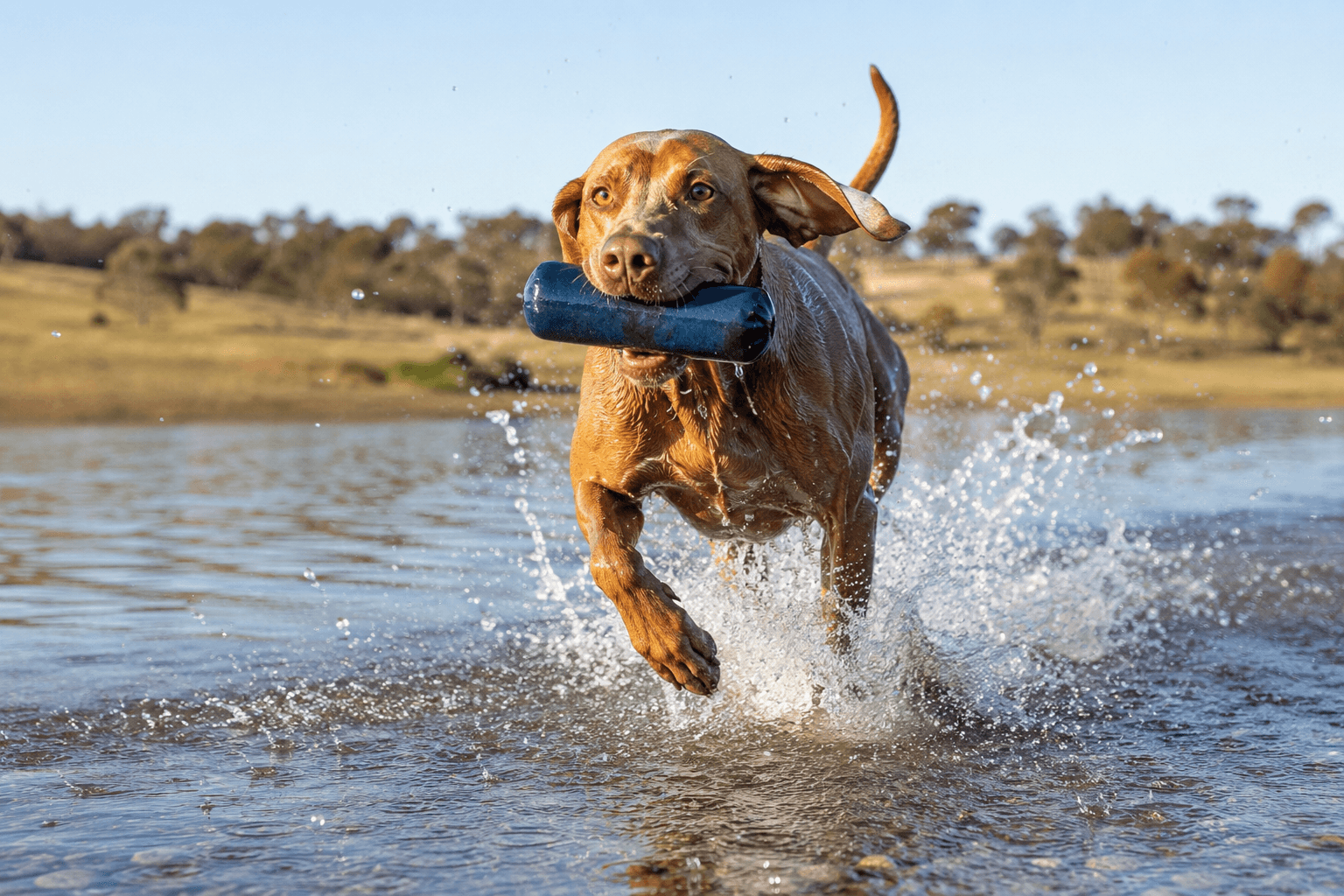
Swimming — if you have access to it, this is exceptional for working dogs. It builds muscle, it’s low-impact, it demands real effort, and most working dogs take to water. A 20-minute swim session with a dog jumping in and out, retrieving, chasing in water, will exhaust a dog far more than a two-kilometre walk.
Hills and rough terrain — a steep hill run or a session on uneven ground (sand, long grass, rocky areas) forces your dog to work harder than flat pavement. The muscles are engaging differently, the balance challenge is higher, the effort is real. Even a short hill sprint is more taxing than distance on flat ground.
Off-lead free run — in a secure space, a dog running at their own pace without restriction will naturally exercise harder than one on lead. They’ll alternate sprinting and recovery, which is actually more efficient than steady-state movement.
The key principle: Intensity beats distance every time for a working dog.
Mental Exercise: The Real Tire-Out
Here’s what most people miss: you can physically exhaust a high-drive dog and they’ll still have mental energy left over to destroy things. The brain is where working dogs actually get tired.
A border collie that’s been walked all morning but hasn’t used its brain will still pace, still chew, still find trouble. The same dog given 15 minutes of real mental work will settle for hours.
What counts as mental exercise:
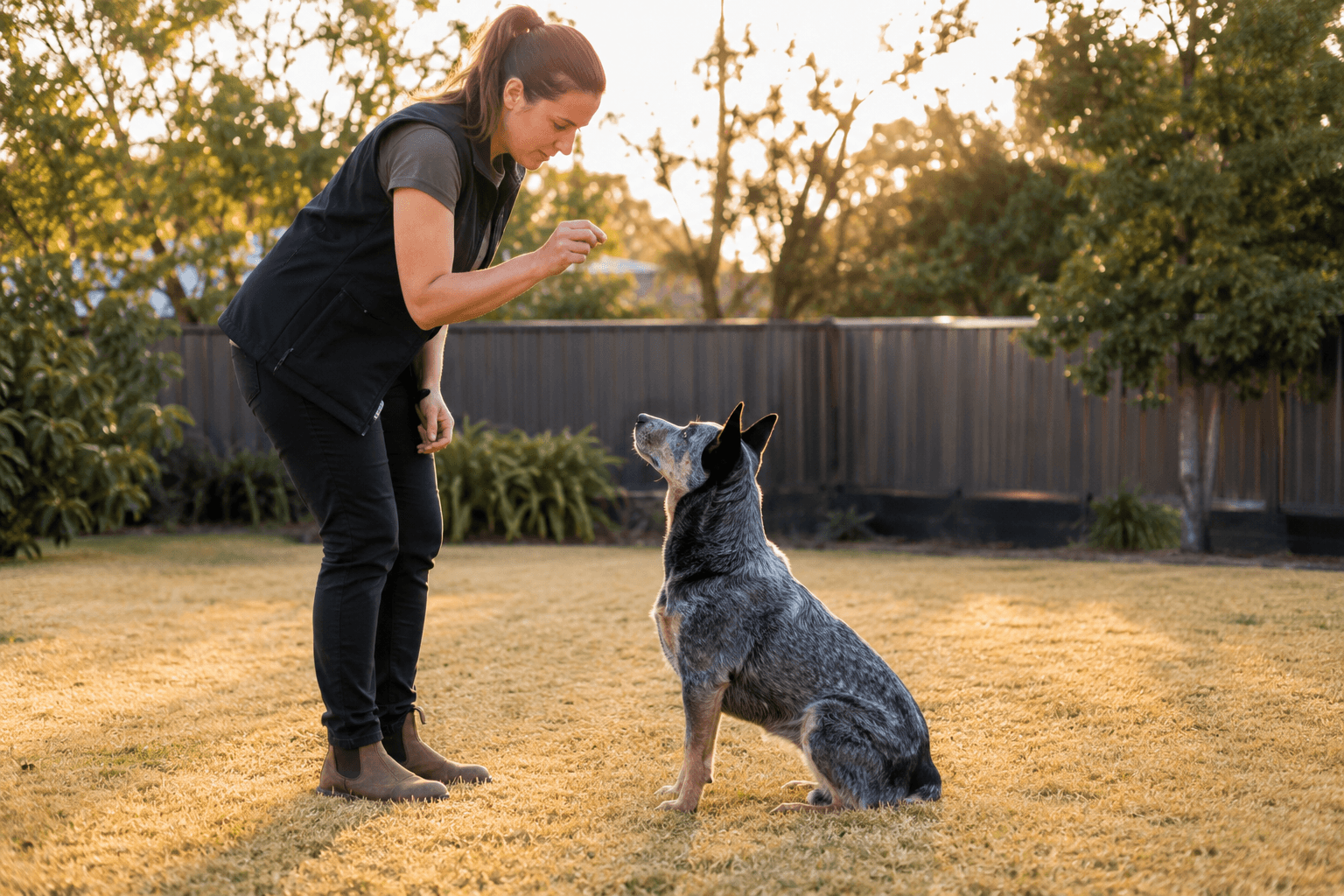
Training sessions — proper training, not just “sit” in the backyard. Working through new commands, puzzle-based obedience, games that require the dog to think and problem-solve. A 15-minute training session where your dog is genuinely engaged — where they’re thinking, trying, being rewarded for effort — will tire them more than an hour of walking.
Scent work and nose games — hiding treats in the grass, creating scent trails, playing hide-and-seek with a toy or person. A dog using their nose intensely for 20 minutes is using the part of their brain that was literally engineered for hours of work. This is extraordinarily tiring for them.
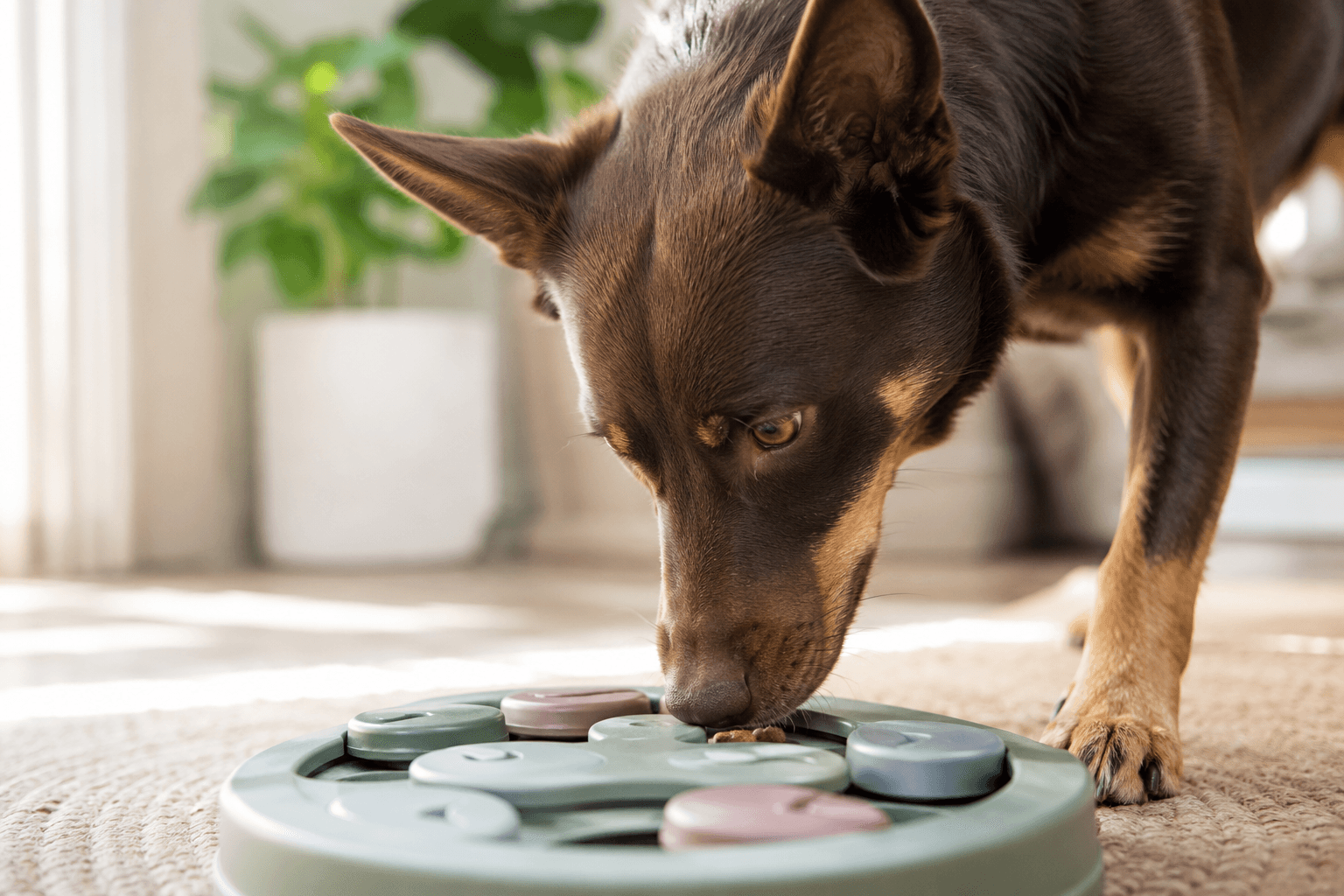
Puzzle feeders and problem-solving toys — a Kong filled with food, a puzzle board with hidden treats, a sniff mat. The dog has to figure out how to access the reward. This isn’t play — it’s work, and their brain recognises it as such.
Impulse control games — “wait,” “leave it,” controlled recall games, place training. Games where the dog has to actively suppress an impulse and wait for permission. This is cognitively demanding in a way casual play isn’t.
Novel environments and exploration — a new park, a hiking trail they haven’t been on, an unfamiliar space. A dog exploring somewhere new is doing real cognitive work — processing new information, making decisions, thinking.
The consistency matters too. A dog that gets mental work every day settles far better than one that gets it sporadically. A 15-minute training session before breakfast, a scent game at lunch, and a walk in the afternoon gives your dog three different cognitive challenges. By evening, they’re genuinely tired.
“A dog on a loose schedule will work harder to create its own structure — which often means destructive behaviour on a repeating loop. A dog on a tight schedule knows what to expect, when to expect it, and settles between work sessions because it knows work is coming.”
Structure and Routine: The Invisible Component
High-drive dogs aren’t anxious about chaos — they’re anxious about unpredictability. A dog that knows its day has a structure settles better than one where everything is random.
What structure does:
- Gives the dog expectations. “Every morning we train. After breakfast is off-lead run. Lunch is quiet time on the bed.”
- Reduces the decision-making burden on the dog. They’re not constantly wondering what’s happening next.
- Creates a sense of rhythm that working dogs find deeply settling.
A dog on a loose schedule will work harder to create its own structure — which often means destructive behaviour on a repeating loop. A dog on a tight schedule knows what to expect, when to expect it, and settles between work sessions because it knows work is coming.
This is why some high-drive dogs settle perfectly in structured training environments (kennels, competition handlers’ homes) but struggle in casual home situations. It’s not the work that matters — it’s knowing when the work is happening.
What This Looks Like in Practice
A realistic daily routine for a working breed in a suburban home:
Early morning (6–7am): 15-minute training session. Work through commands, teach something new, play an impulse control game. The dog’s brain is engaged.
Mid-morning (9–10am): Off-lead run or fetch session. 20–30 minutes of high-intensity play. The dog sprints, chases, comes back, does it again.
Midday: Quiet time. The dog rests on its bed (an elevated, firm surface where it can see the house helps). No play, no attention.
Afternoon (3–4pm): Scent work or puzzle toy. The dog works on a sniff mat or Kong while you’re around. This is lower-key than morning work.
Evening walk: A social walk, not an exercise walk. 20–30 minutes at a calm pace. The point is exposure and connection, not intensity.
Late evening: Another short training session or quiet game on the bed.
This is not extreme. A working dog was built to work all day. This schedule doesn’t even compare. But it gives them enough of what they were bred to do that they settle in between.
The Myth of the Tired Dog
People often say, “I got a working dog and it’s just too much energy.” What they usually mean is: “I took the dog on longer walks and it still won’t settle.”
Longer walks don’t fix the problem because the problem isn’t exercise — it’s engagement. A high-drive dog needs to know it has a job. A walk is not a job. A walk is something that happens to the dog.
Training, scent work, controlled play with a purpose — these are jobs. The dog knows it. The dog settles after them.
When It All Comes Together
A working breed with:
- Real physical exercise (not distance walking, but intensity)
- Daily mental engagement (training, scent work, puzzle toys)
- Predictable routine
- A place to rest that meets its needs (an elevated bed, somewhere comfortable and secure)
…will settle. The destructive behaviour you thought was a personality flaw was just understimulation. Give the dog what it was built to do, and the behaviour changes entirely.
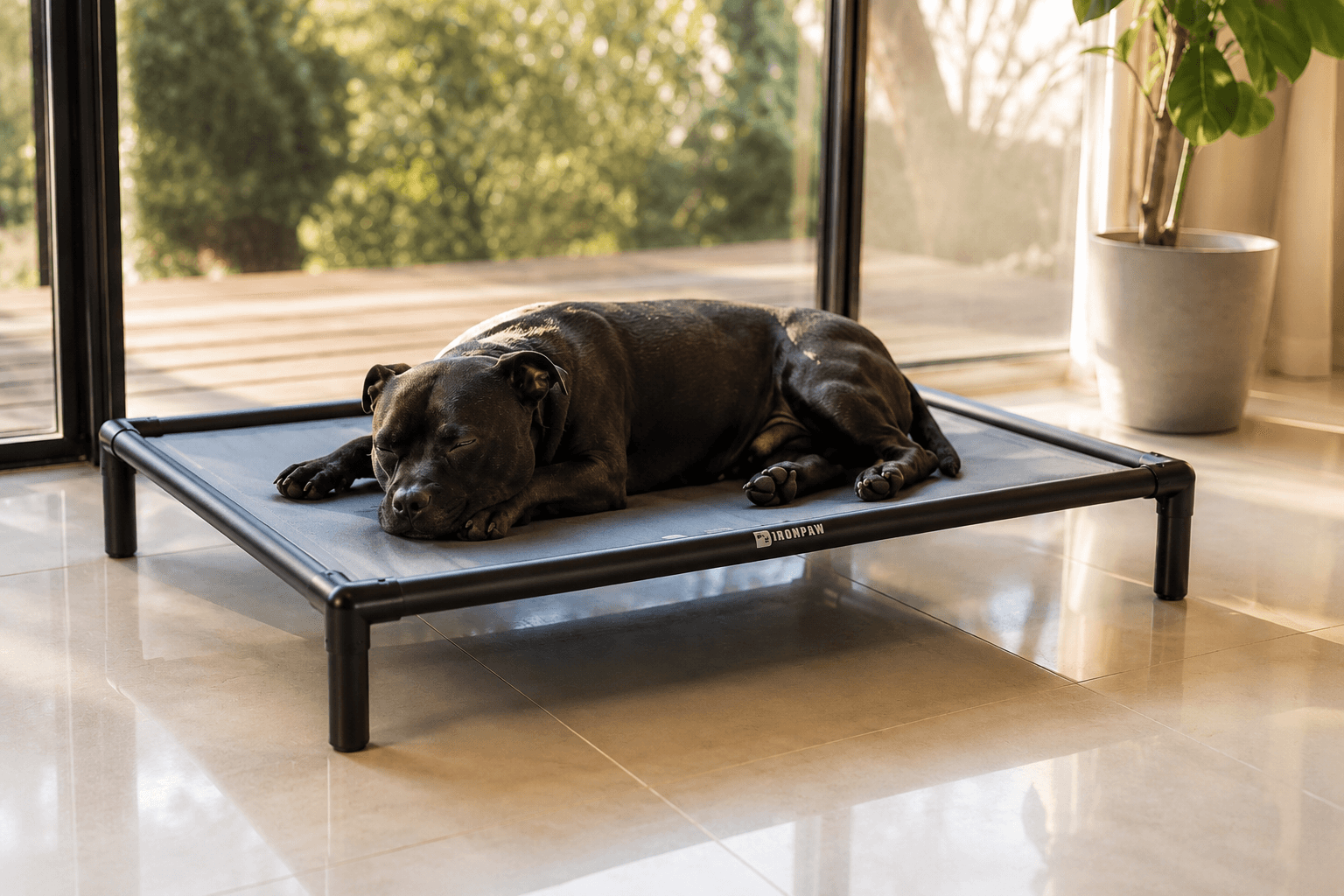
Built for Working Dogs That Need to Work
Heavy-duty elevated beds for dogs that need a place to recover after they’ve done what they were bred to do. 1120GSM PVC fabric. Backed by a 2-year guarantee.
Shop IronPaw Beds →