What Australia Bred Into Its Working Dogs
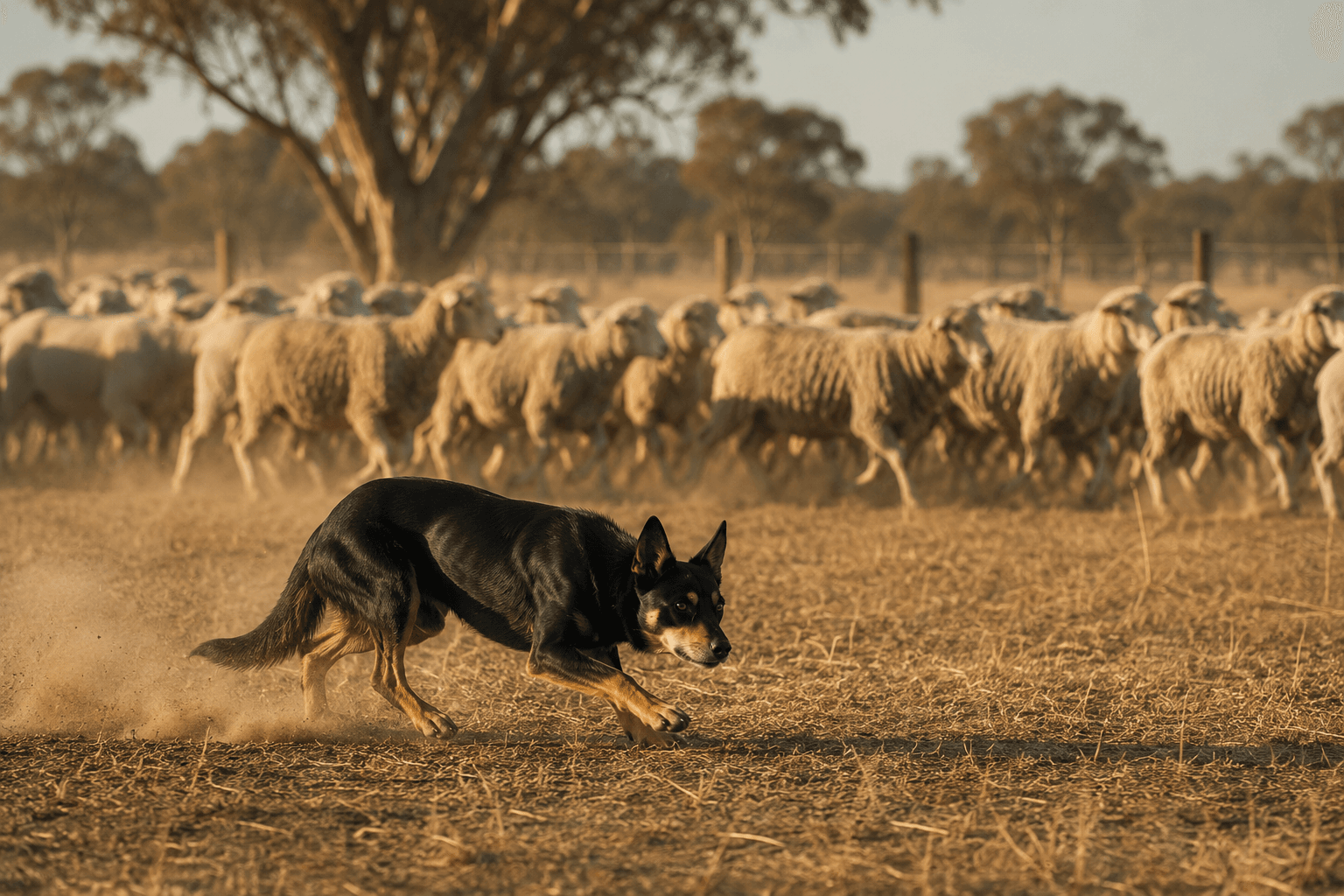
The dog destroying your house isn’t broken. It’s a working dog with the afternoon off — and that changes everything.
The dog pulling the stuffing out of your back step isn’t broken. Working dog breeds were engineered to never switch off…
To understand the modern “destructive” Australian dog — the kelpie that scales the fence, the heeler that nips ankles, the koolie that has dismantled three beds this year — it helps to go back to the country these breeds were made in. The traits that made them legendary out on the stations are the same ones causing trouble in a suburban backyard. They were engineered, quite deliberately, to never switch off. And a couple of hundred years later, they still don’t.
A country that demanded a different kind of dog
When the early pastoralists pushed sheep and cattle across New South Wales, Victoria and Queensland in the first half of the 1800s, they brought working dogs with them — mostly collie-type herders off the boats from Britain and Scotland. Those dogs were good. They just weren’t built for this.
The Australian inland was a different proposition entirely: enormous unfenced runs, relentless heat and dust, and half-wild Merino sheep and cattle scattered across distances no British paddock dog had ever been asked to cover. A herding dog here might work all day, range kilometres from its handler, and have to make decisions on its own with no one close enough to give a command.
So settlers did what settlers did with everything else — they bred for the conditions. What came out the other end were dogs shaped less by the show ring than by the brutal arithmetic of the outback: cover ground, tolerate heat, work for hours, and above all, keep thinking.
The Kelpie: engineered to think for itself
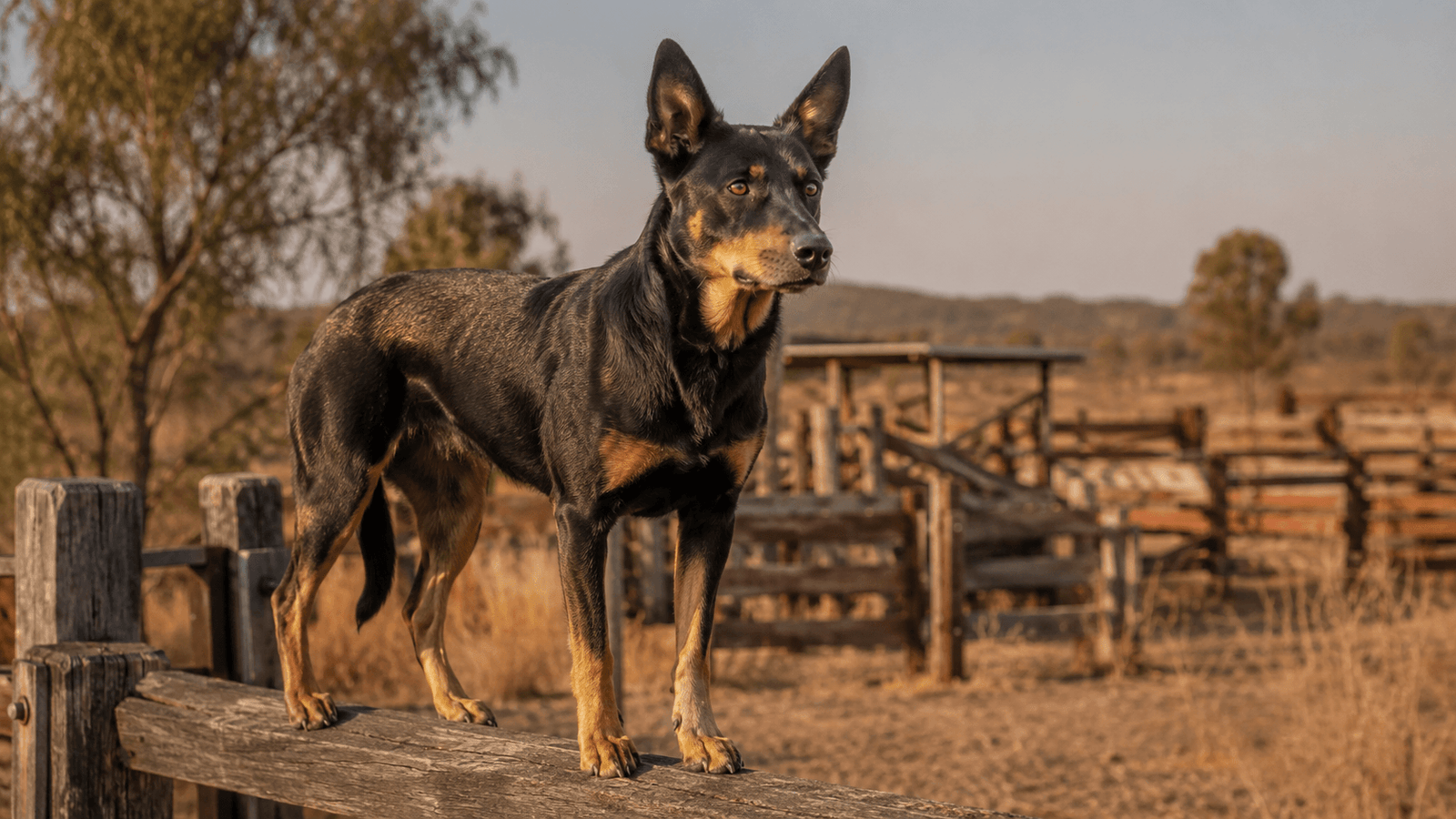
The kelpie descends from those imported Scottish and British working collies, hardened by a few decades of breeding for Australian conditions. The first dog actually called “Kelpie” was a black-and-tan pup bought by a stockman named Jack Gleeson around 1872, from a litter born at George Robertson’s Warrock Station near Casterton in Victoria. The name comes from Celtic folklore — a shape-shifting water spirit — and it stuck so hard that within a generation, almost any dog of that type was called a kelpie.
What the breed was built to do tells you everything about why it behaves the way it does. A working kelpie was expected to muster huge mobs of sheep across rough, hot country, often covering enormous distances in a day, frequently out of sight of the person it was working for. That last part is the key: a kelpie had to solve problems by itself. Independent, restless intelligence isn’t a quirk of the breed — it’s the entire point of it.
The myth, busted: Everyone repeats that the kelpie is part dingo, its toughness borrowed from the wild. It’s a wonderful bit of national mythology — and it appears to be wrong. A 2019 genomic study found no support for common ancestry between the kelpie and the dingo. The kelpie is, essentially, an Australian collie: not crossed with the wild, just forged by the country it had to work in.
The Cattle Dog: where the dingo really did get in
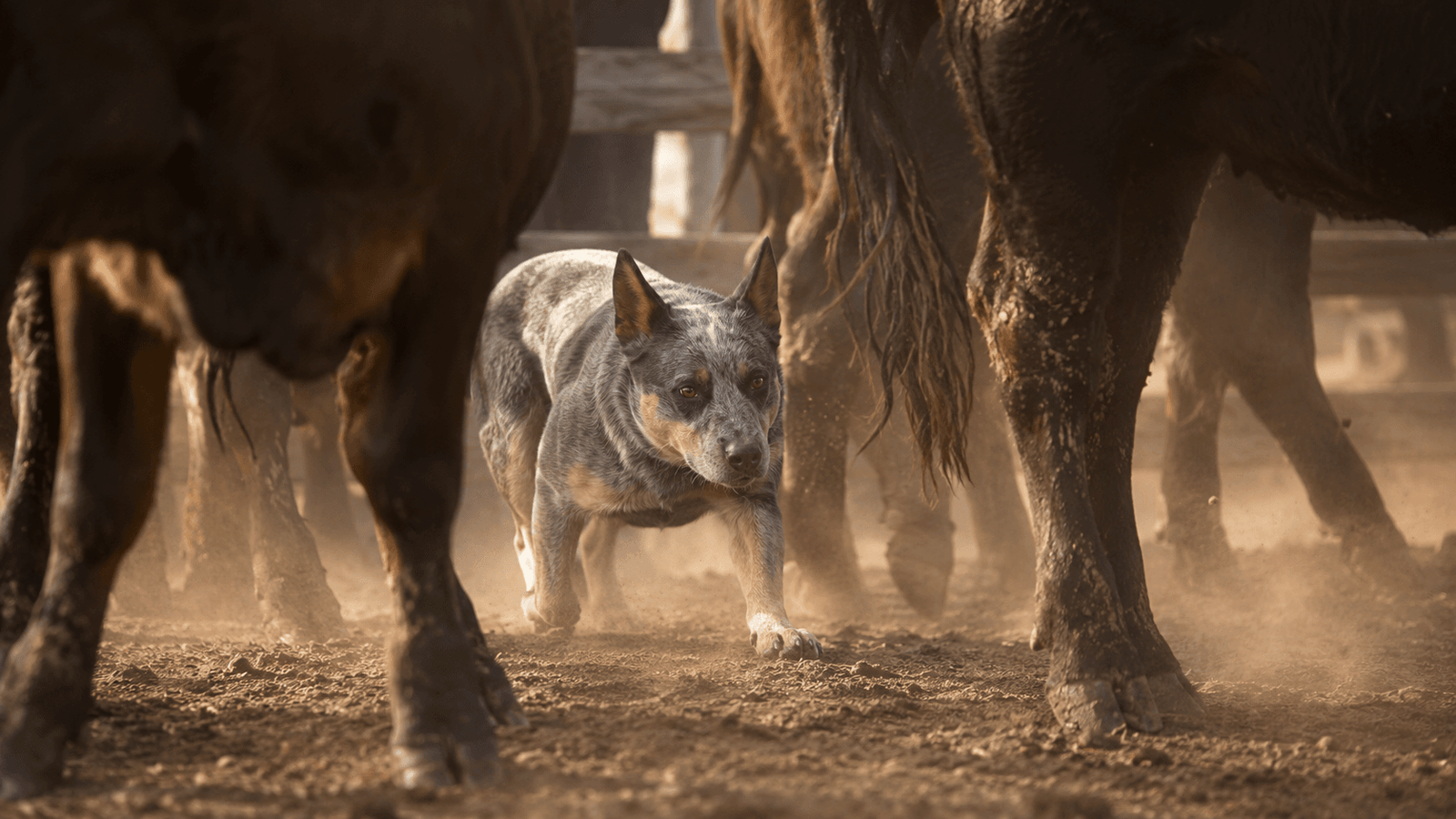
If you want the dog that actually has dingo in it, you want the heeler.
Around 1840, in the Hunter Valley, a pastoralist named Thomas Hall set out to solve the same problem from a different angle. Droving cattle long distances across unfenced country needed a tougher, more independent animal than the imported dogs could provide. So Hall crossed British droving dogs with tamed dingoes. The result became known as “Hall’s Heelers” — the foundation of what we now call the Australian Cattle Dog, the Blue Heeler, the Queensland Heeler.
The genius of the cross is visible in the dog to this day. From the dingo came silence, stamina, heat tolerance, and a wariness that never fully relaxes. From the working dog came biddability and the nerve to face down a cranky bullock. The heeler works the way its name suggests — quietly, from the rear, nipping at the heels — and it bred true to a settled blue colour by around 1890.
So when your heeler watches the entire house, clocks every car door in the street, and seems constitutionally incapable of being off duty — that’s not anxiety you’ve accidentally caused. That’s two centuries of wild-dog vigilance doing exactly what it was bred to do.
The Koolie: the oldest one nobody’s heard of
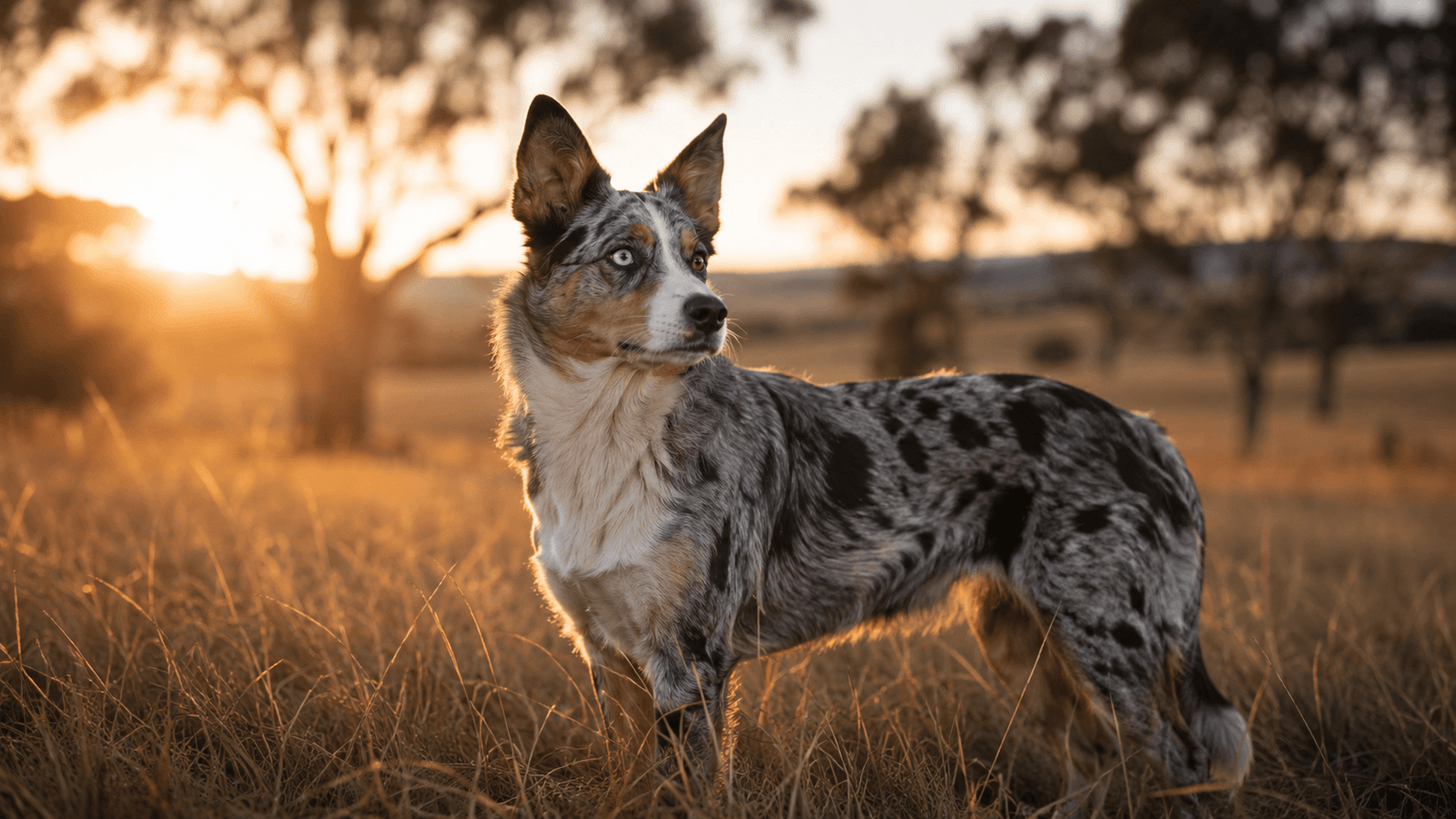
The third breed in this story is the one most people have never met. The koolie is among the oldest working dogs in Australia, descended from British collies imported in the early 1800s. Its odd name is a small piece of colonial history in itself: German settlers in South Australia, the story goes, couldn’t quite get their mouths around “collie,” and “coolie” is what came out.
What makes the koolie interesting is what it wasn’t bred for. Unlike almost every recognised breed, the koolie was never standardised for appearance — no kennel club, no fixed coat, no agreed colour. It was bred purely for the work, which is why koolies turn up in every colour and pattern under the sun. Genetically, it’s the kelpie’s closest known relative, and like the kelpie it was made to run vast distances in a working day. It’s the purest expression of the Australian approach: breed for the job, never for the ribbon.
The common thread: built to never switch off
Three different breeds, three different origin stories — and one identical brief. Every one of these dogs was shaped to cover ground, tolerate heat, work for hours on end, and keep its brain running while making decisions without being told. That isn’t a mood or a phase or a training failure. It’s hardwired. It is the thing the breed is.
And here’s the part that matters for anyone living with one of these dogs today: a body and a brain engineered to muster stock across kilometres of open paddock does not power down just because the address has changed to a quarter-acre block in the suburbs.
You don’t own a misbehaving dog. You own a working one.
Why this shows up in your living room
This is where the destruction comes from. The “naughty” dog tearing through beds, digging craters in the lawn, pacing the fence line, escaping, and redesigning the couch is very often just an under-employed working dog inventing its own job — because the one it was built for is nowhere to be found.
It isn’t spite. It isn’t stupidity. It’s a high-drive animal with an enormous engine and nothing to point it at, so it points it at your stuff. Understanding that flips the whole problem on its head. You don’t have a misbehaving pet. You have a working dog with the afternoon off and no roster.
What actually helps is giving the engine somewhere to go:
- Real physical exercise — not a stroll around the block, but movement that genuinely tires a dog built to run for hours.
- Mental work — training sessions, scent games, puzzle feeders, a “job” to do. Tiring the brain matters more than tiring the legs, and a bored kelpie is far more destructive than a physically tired one.
- Routine and structure — these dogs were bred to work to a rhythm. Predictability settles them.
Give a working breed something to think about and somewhere to spend its energy, and a startling amount of the “behaviour” quietly disappears.
Built to a standard
There’s something worth respecting in all of this. Australia’s working dogs were built to a standard the country itself forced on them — tough, tireless, made to keep going long after a softer animal would have quit. They earned their legend honestly, out in conditions most dogs would never survive.
The least we can do is meet them halfway. Give them the outlet they were built to need. And where their gear is concerned, hold it to the same brief they were held to: tough enough to keep up with a dog that doesn’t switch off, and built for the heat and the outdoors they were made for. A solid, elevated place to rest is a small part of that — the bigger part is simply remembering what you’re actually living with.
You don’t own a misbehaving dog. You own a working one. Give it work, and give it gear that can take it.
Pingback: High-Drive Dog Exercise: Why A Walk Won’t Cut It - IronPaw